

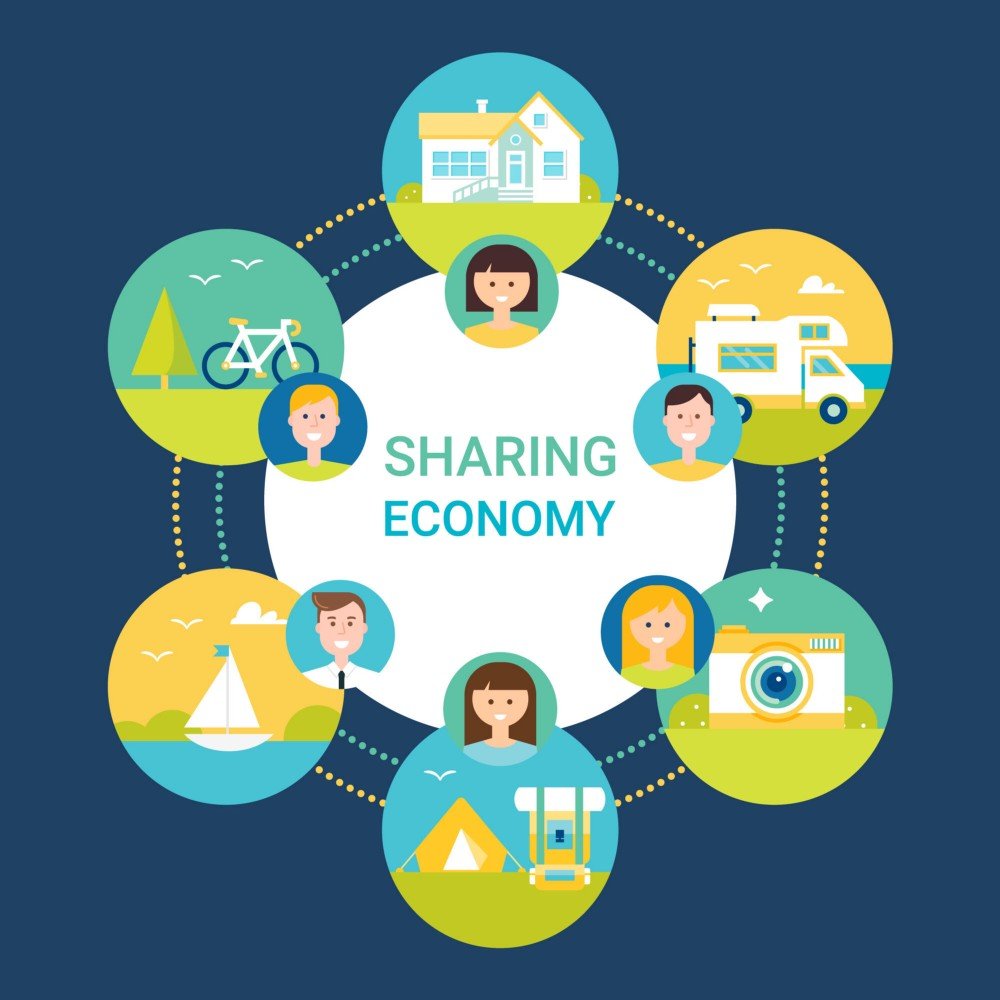
The past decade has brought a profound shift in how consumers perceive ownership. The traditional “buy — use — own” model is rapidly losing relevance, giving way to the sharing economy — an approach where access becomes more valuable than possession. Companies such as Airbnb, Uber, Rent the Runway and Zipcar have demonstrated that business models built on shared use of resources can be scalable, efficient, environmentally sound and highly profitable.
Accelerating digitalisation, new consumption habits, rising resource costs and a growing sustainability mindset have created conditions in which customers increasingly choose access over ownership. This shift applies to clothing, transportation, electronics, tools, housing and even household items. For businesses, this creates new markets, stimulates demand for innovative services and lowers entry barriers since clients no longer expect to purchase assets — they expect convenience, flexibility, affordability and a seamless service.
Businesses operating in the sharing economy show exceptional adaptability and rapid scalability. Their models combine digital platforms, efficient logistics and personalised service. At the same time, they reduce environmental pressure, as a single resource is used repeatedly by many users. According to the European Environment Agency, the transition to shared-use systems in certain sectors can reduce waste generation by 40–60% and resource consumption by 25–35%.
To understand why the sharing economy has become one of the defining trends in modern business, it is helpful to highlight its key drivers:
- shifting values: younger generations prioritise experience over ownership;
- economic benefit: accessing products is often cheaper and more flexible than buying;
- environmental impact: reusing resources reduces waste and limits the need for new production;
- digital platforms have made access immediate and effortless;
- increased trust enabled by transparent rating and review systems.
The shared-economy model now extends far beyond housing or ride-sharing. It includes equipment rental, clothing subscriptions, co-working spaces, tool libraries, mobility services, baby product rentals, short-term access to medical devices and corporate fleets of e-bikes and e-scooters. Each of these segments offers unique opportunities and is reshaping consumer behaviour globally.
Ukraine, too, stands at a favourable point for adopting sharing models. Post-war reconstruction, increased internal mobility and limited resources fuel demand for affordable, flexible, temporary solutions. Businesses capable of providing transparent, safe and customer-oriented shared-use services will play a significant role in shaping the country’s economic development.
Global examples show that success in this sector does not depend on owning the products, but on delivering high-quality service and ensuring accessibility. Airbnb does not own hotels, Uber does not own cars, and Rent the Runway does not manufacture garments. Their value lies in orchestrating access to resources that already exist. This fundamentally changes the logic of business operations: companies become coordinators of value networks rather than manufacturers.
At the same time, the sharing economy introduces new challenges. Companies must guarantee digital security, quality control, user safety and trust between participants. Insurance systems, service standards and regulatory compliance become essential components of the business model. Those who can align transparency with service convenience will gain a durable competitive advantage.
Environmental benefits play an equally important role. Shared-use systems reduce CO₂ emissions, limit overproduction, extend product life cycles and decrease pressure on natural resources. For international investors, this signals that the business not only generates profit but also aligns with global sustainability standards.
Ukrainian businesses already have multiple opportunities to integrate the sharing economy — from local rental services to nationwide platforms for shared access to tools, equipment, sports goods, construction materials or tourism gear. This approach allows companies to operate with minimal investment in physical assets, scale quickly and diversify revenue streams.
Ultimately, the sharing economy is not just a trend — it is the natural evolution of a world where access becomes more important than ownership. Companies that embrace this model increase their operational efficiency, build stronger customer loyalty, reduce environmental impacts and secure a place in the flexible, resilient and technology-driven economy of the future.