
The world is undergoing one of the most significant economic transformations in its history. The traditional “take — make — dispose” model is rapidly becoming obsolete, as it leads to resource depletion, rising raw-material costs and increasing volumes of waste that harm ecosystems and human health. In its place emerges the circular economy — an approach that not only promotes more rational resource use but also opens entirely new opportunities for businesses, capable of forming the industries of the future.
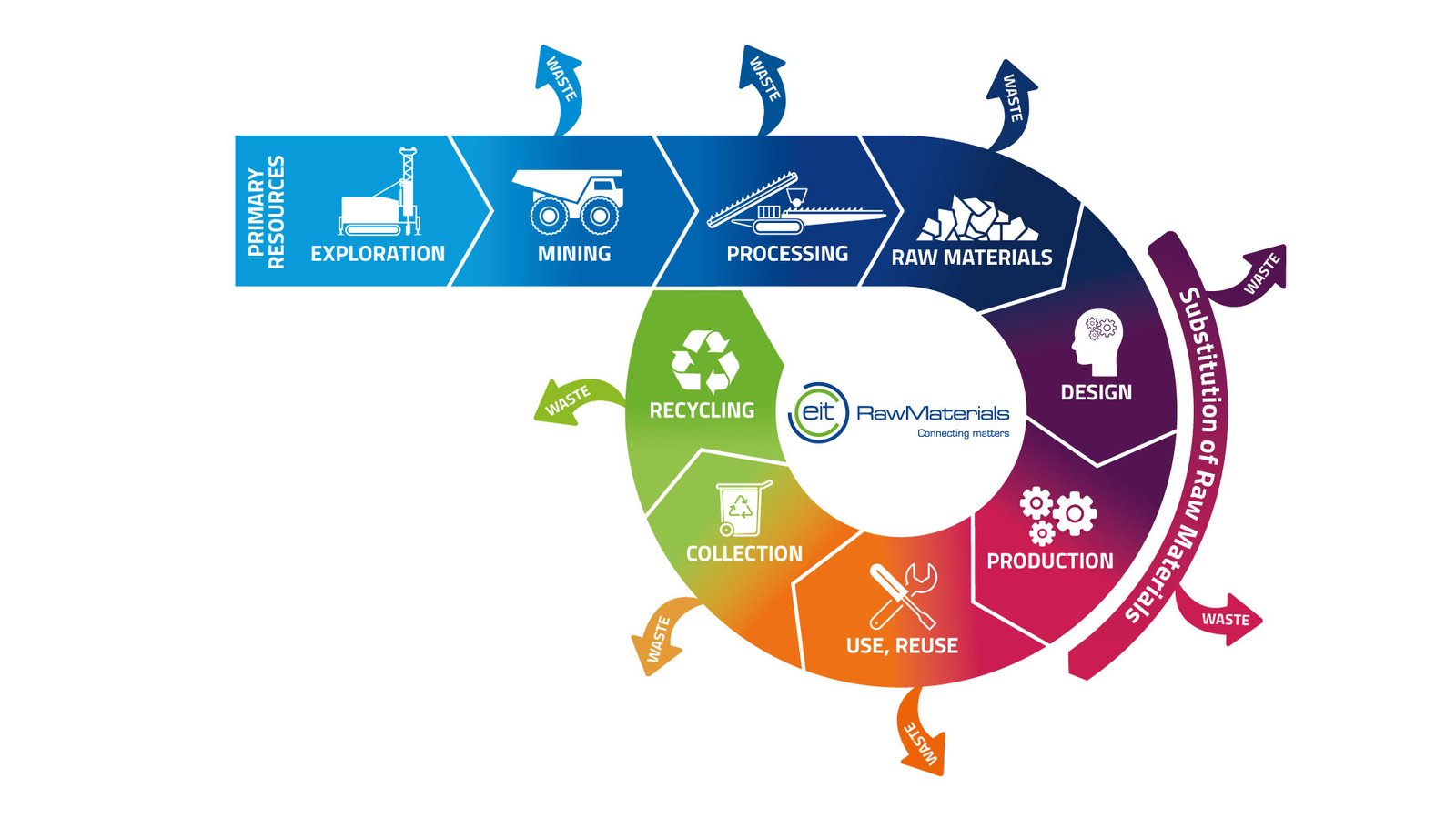
The circular economy is built on the idea that resources should remain in circulation for as long as possible, generating maximum economic value. This means that materials do not disappear after a single use; instead, they return to the cycle as secondary raw materials, recycled products, reusable components or new materials created through upcycling. Such a model reshapes not only production, but also logistics, sales, service operations and even post-purchase interactions with customers.
Within the European Union, the shift toward circularity has become an official policy priority. The European Green Deal identifies circular economy principles as one of the core drivers of economic growth. According to the European Commission, a full transition to a circular model could create over 700,000 new jobs across the EU and reduce CO₂ emissions by 30–50%. For businesses, this translates into access to new markets, investments and partnerships, as well as reduced operational costs thanks to resource optimization.
Rapid expansion of circular solutions is evident in multiple sectors: construction, agriculture, light industry, electronics, food production, logistics and hospitality. Companies that integrate circular principles early gain significant competitive advantage and shape emerging markets, as demand for “green” products and services grows much faster than supply.
To better understand why the circular economy is becoming a strategic priority for global business, it is helpful to highlight the fundamental principles that underpin this model:
- products are designed to allow easy disassembly, repair or repeated use;
- materials retain their value for as long as possible and re-enter the cycle;
- production and consumption generate minimal waste;
- resources are used efficiently, with emphasis on energy-saving and environmental performance;
- business models shift from one-time sales to service-based systems, where companies earn revenue from long-term product use.
These principles may seem abstract, but they are already embedded in large-scale commercial models. Fashion brands worldwide are implementing take-back programs for used clothing, producing capsule collections from recycled materials and shifting toward rental-based models. In construction, the reuse of materials recovered after demolition is becoming increasingly common. In the electronics industry, repairability has become one of the key competitive features influencing consumer choice and regulatory policy — including the EU’s “Right to Repair.”
Importantly, the circular economy is not limited to waste management or recycling technologies. It fundamentally changes the logic of business, replacing linear production chains with interconnected ecosystems. A company transitions from being merely a manufacturer to becoming a long-term resource manager at every stage of a product’s lifecycle. This enables the creation of stable, predictable business models that are less dependent on fluctuations in raw-material prices and external market risks.
Circular integration also brings significant socio-economic benefits. The development of local recycling facilities, upcycling workshops, repair centers and service hubs creates employment opportunities and stimulates small-business growth. This is particularly relevant for regions with tourism potential or established creative industries, as circular initiatives often become attractive points of interest for young people, investors and visitors.
Ukrainian businesses likewise have a unique opportunity to embed circularity into post-war reconstruction. The enormous volumes of construction debris generated by destruction can be transformed into secondary materials for new infrastructure projects. International donors actively support initiatives that reduce waste, strengthen local production capacity and promote environmentally responsible technologies. As a result, the circular economy becomes not only a sustainability tool, but also a strategic direction for modernizing the Ukrainian private sector.
For companies seeking to adopt circular principles, the first step is strategic assessment: identifying which materials can be returned to the cycle, which processes can be optimized, which products can be redesigned and where service-based models can replace traditional ownership. Conducting a resource and waste audit is a critical stage, as it reveals opportunities that have often gone unnoticed. Businesses frequently discover that materials previously considered “waste” have real market value and can be transformed into new products or revenue streams.
Ultimately, the circular economy is not a futuristic concept but a practical pathway toward higher efficiency, reduced costs, new market creation and stronger competitive positioning. It offers a business model that simultaneously addresses environmental risks and generates economic value. Companies that adopt circular solutions today will become tomorrow’s leaders — innovative, resilient, profitable and highly attractive to investors.