
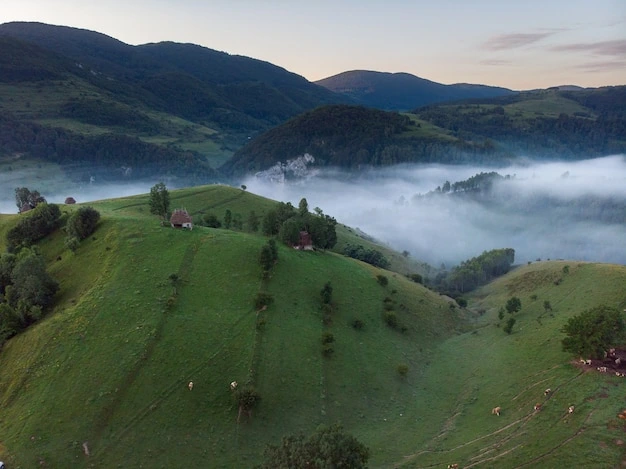
Skole is an example of how a small town can develop its own tourism strategy without copying large resorts.
Its development is based not on mass tourism, but on the quality of space, cultural heritage, and a sustainable approach to the use of natural resources.
Balance between tourism and communities
The Skole community does not seek rapid growth through intensive development.
Instead, a model of moderate development is being formed, in which the key decisions are job creation, attracting small businesses, and keeping profits within the community.
This approach allows for the combination of tourism activity with long-term land management.
Tourism as an element of the local economy
Small hotels, farms, craft workshops, and guided tours are not just components of a tourism product.
They create a local short-chain economy where producers and consumers interact without intermediaries.
This principle underlies modern approaches to the development of small communities, particularly in the concept of Community Wealth Building.
Cultural heritage as a resource for development
The Skole region has preserved historical buildings, including the Gredel brothers’ stable and casino, an example of late 19th-century architecture that is being considered as a potential center for cultural events and residences for artists.
Its restoration is part of a comprehensive development program coordinated by the Skole Development Office.
The goal is to transform historical sites into functional spaces for culture, education, and tourism.
Sustainable tourism and new forms of recreation
Tourism in the Skole community is being developed through infrastructure projects that combine ecology, education, and rehabilitation.
Among such initiatives are the FRIESLAND equestrian complex, which integrates recreation, hippotherapy, and sports, and the WoodCraft Skole network of workshops, focused on the revival of crafts and design.
Such projects set a new format for tourism offerings, where value and sustainability are more important than volume.
The potential of partnerships
Skole region opens up opportunities for partnerships — both for private investors and for state or international programs.
Investments here are directed not only into tourism, but also into related industries: woodworking, energy, education, and culture.
This forms a multisectoral development model, where tourism is only one of the drivers.
Skole is gradually building its own model of territorial development, in which tourism is not an end in itself, but a tool.
This model is based on the rational use of resources, local competencies, and partnerships with businesses.
It is this approach that allows small communities to remain competitive while preserving their identity.